 Floating
Blip: Bluetooth Finder & Tracker
An advanced local Bluetooth utility engineered for privacy. Locate lost tags, headphones, and beacons instantly. Protect yourself against unwanted tracking with stalker safeguards. Featuring a 100% offline, on-device AI tracker assistant.
Locate, Safe-keep, Log.
Engineered on Jetpack Compose and local Room architecture to give you full visibility of nearby signals.
Real-Time Proximity Radar
Low-latency active Bluetooth LE scanning with structured categorization. Filter specifically for AirTags, AirPods/Apple peripherals, or general beacons in a tidy 2x2 grid layout.
Acoustic Geiger Counter
Synthesizes real-time 440 Hz PCM audio chirps. As signal strength (RSSI) increases, beeps accelerate dynamically, letting you pinpoint hidden keys or tags behind walls or inside cars without looking at your screen.
On-Device Gemma Assistant
Powered by a 2.6 GB Gemma LLM running locally via LiteRT-LM. With GPU acceleration (OpenCL) and zero cloud data leaks, ask questions about nearby trackers. The AI triggers scanner tools on-demand and parses logs privately.
Tracker Guard Logging
Monitors beacons and logs histories over time. Anti-congestion algorithms throttle Room DB updates to once every 15s. Identifies if an unknown AirTag is consistently detected near you, alerting you of potential stalking.
Hardware Alert Buzzer
For compatible devices, send immediate alert writes (`0x02` high alert) directly to the BLE Immediate Alert Service (`0x1802`) to sound locator sirens. Apple beacons are safely filtered out, preventing unauthorized locks.
Saved Devices & Custom Notes
Save scanned items in a local library with customized names and personal reference notes. Keep logs of when they were spotted, distance records, and check detailed signal logs locally on the device.
Interactive Sandbox
Experience Blip's key features directly inside your browser. No installs required.
Active Bluetooth LE Mapping
Blip performs low-latency BLE scans. In our visualizer, click "Scan Bluetooth" to simulate discovering nearby Smart Tags, headphones, and trackers.
Results will appear here when scanning is active.
Audio-guided Proximity Tracking
Instead of staring at a compass, Blip synthesizes short audio chirps that accelerate as you get closer to the beacon. Click "Enable Geiger Audio", and drag the slider to simulate distance!
Geiger Distance Simulator
On-Device Offline AI Security Assistant
Blip runs Google's Gemma model locally, integrated with device APIs. Click a suggestion chip to ask Gemma to scan or check for security threats.
⚠️ Local AI: Analysis is probabilistic. Content can be flagged to support via the flag icon.
Screen Walkthrough
A native Jetpack Compose user experience with clean, intuitive interfaces.
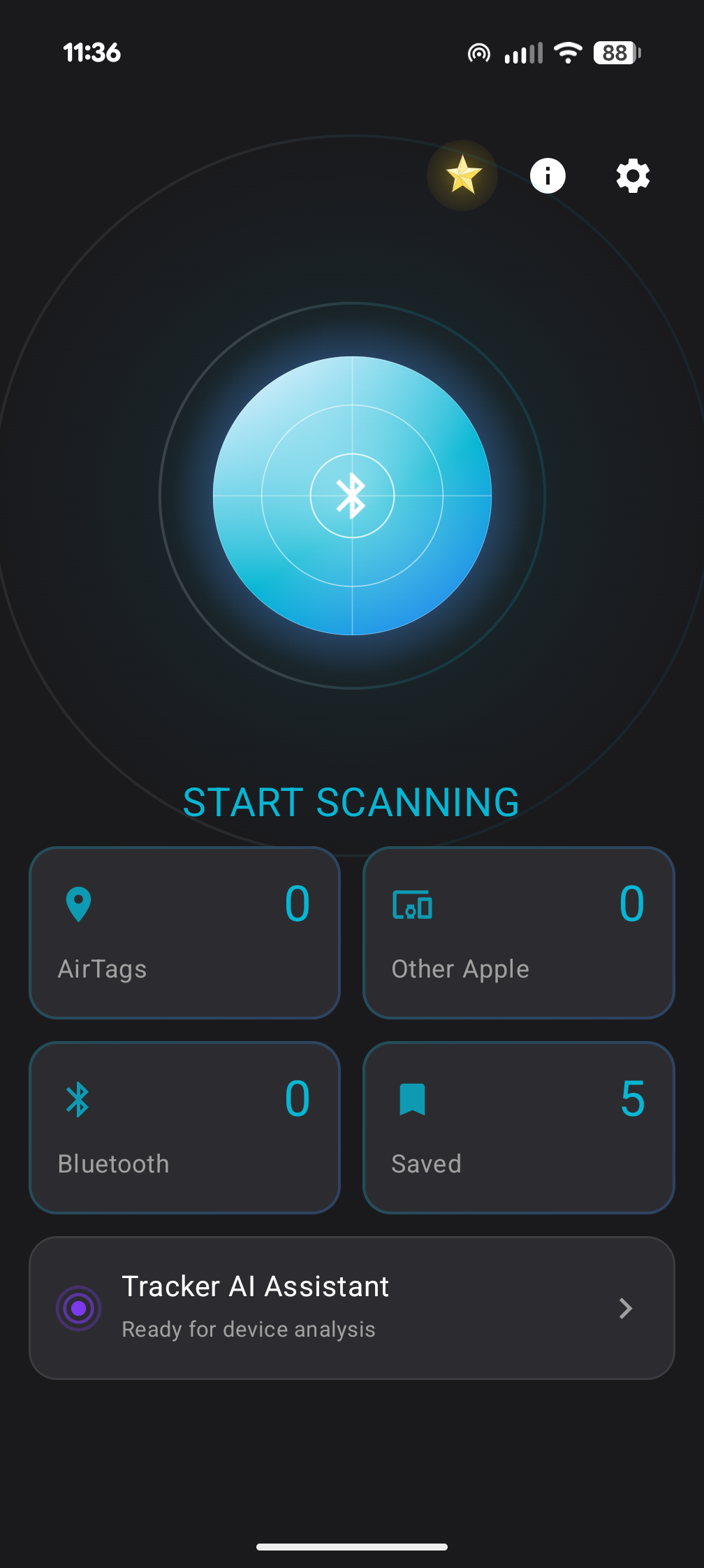
Main Dashboard (Idle)
The dashboard layout displays tracking status, categories filters, and AI assistant shortcut. In the idle state, the main radar button pulses softly to indicate scanning is ready.
Under the Hood Architecture
How we solved common mobile platform bottlenecks to build a stable utility app.
GATT Queue Channel
Android's Bluetooth stack saturates easily when connecting to multiple GATT servers. Blip pipes unknown device addresses through a FIFO coroutine Channel, resolving device names sequentially and closing connections immediately to protect transceiver memory.
LiteRT-LM Gemma Engine
A highly-quantized 2.6 GB Gemma weight runs locally on-device. Blip loads native libraries to check OpenCL compiler support. If present, execution is shifted to OpenCL GPU acceleration, preserving CPU threads for UI fluidness.
Real-Time Audio Synthesis
Traditional media players introduce latency. Blip generates raw sine wave buffers in PCM 16-bit directly in memory. A separate playback thread feeds a high-priority AudioTrack, altering click rates in sub-millisecond precision based on smoothed RSSI scans.
Room Database Logs
Logging every beacon packet consumes massive disk I/O and battery. Blip employs RSSI sliding filters (size 4) and checks against memory timers. Room Database logs for AirTags are throttled to a minimum of once every 15 seconds per unique MAC address.